
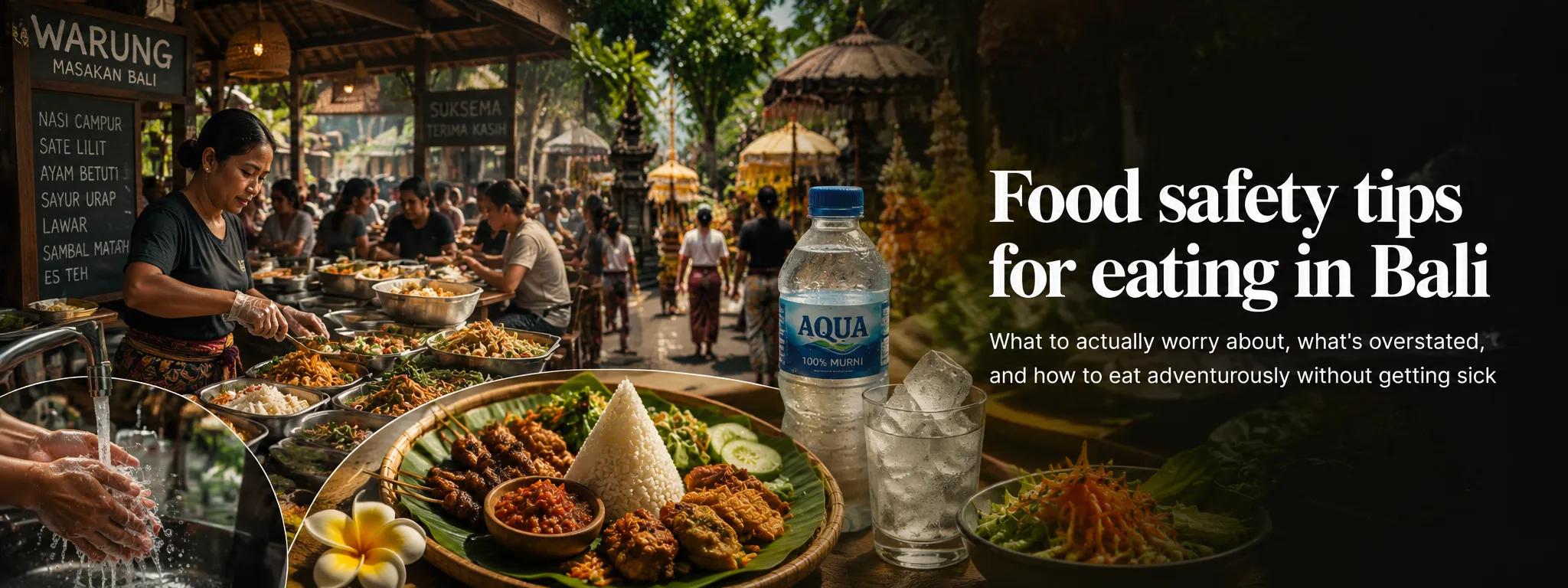
Eating well in Bali does not require living on hotel toast, and eating locally does not require pretending food safety is a personality test. The useful rules are boring and universal: safe drinking water, good temperature control, sensible turnover, clean handling and clear communication when allergies matter.
I would eat broadly but keep the non-negotiables boring. I do not judge food by whether the venue looks 'authentic' or polished; I care much more about how water is handled, whether hot food is hot, whether cold food stays cold and whether the place can answer an allergy question properly.
01 Eat widely — judge handling, not whether food looks “local”
Bali’s food is one of the best reasons to travel here, and “local” does not mean unsafe. A busy warung serving a short menu can be a better bet than a quiet international restaurant with trays sitting around. The useful questions are about water, temperature, turnover, cleanliness and storage rather than whether the dish is nasi campur or pizza.
Pick places that are busy enough for ingredients to move, watch whether cooked food is served hot and use common sense if raw ingredients have been sitting in tropical heat. You cannot remove every risk from travel, but you can avoid the obvious ones without spending the holiday eating packaged biscuits.
02 Drinking water is the non-negotiable
Visitors should not treat Bali tap water as ordinary drinking water. Use sealed water from a reliable source or water from a reputable filtered dispenser. Many villas and hotels provide large refillable containers, which reduce plastic and make brushing teeth and filling bottles straightforward.
This is the one place I do not get adventurous. Drinking water has to be reliably treated or sealed; the cultural experience does not improve because the tap looked trustworthy.
Keep reusable bottles clean and avoid topping them up from a tap unless the property clearly identifies the supply as treated drinking water. If you are travelling with infants or have a medical condition that makes gastrointestinal illness more serious, be more conservative and follow advice from your doctor.
03 Ice: judge the venue, not old folklore
Commercial ice is widely used across Bali, including by reputable restaurants, hotels and cafés. The old blanket rule that “all ice is dangerous” is too crude. The better question is whether you trust the venue’s water and food-handling practices. At a well-run restaurant, a cold drink with commercial ice is a normal part of travelling in Bali.
If you are at a makeshift stall with questionable water handling, be more cautious. You can ask for a sealed cold drink without ice. The same principle applies to blended drinks: clean equipment, safe water and proper ingredient storage matter more than the shape of the ice cube.
04 Hot food should be hot, cold food should stay cold
Bacteria multiply quickly when prepared food spends too long warm. Favour dishes cooked to order or food that is clearly piping hot rather than lukewarm trays that have been sitting for an unknown period. At buffets, look for active turnover and functioning hot or chilled storage.
I like simple food-safety physics: hot stays hot, cold stays cold, and lukewarm buffet archaeology is not a compulsory Bali experience.
Hotel breakfast spreads can be huge, but size is not safety. If dairy, cut fruit, seafood or cooked dishes that should be chilled are sitting warm for a long time, choose something else. Freshly cooked eggs, pancakes, soup or rice dishes can be a safer and often better option than food that has been displayed since the buffet opened.
05 Raw produce and seafood deserve more judgement
Salads and cut fruit are not automatically off-limits, but they add more dependence on washing water, refrigeration and careful handling. Fruit you peel yourself gives you more control. At reputable restaurants with strong turnover, many travellers eat salads without trouble; at a dubious venue in high heat, a cooked dish is the lower-risk choice.
Raw or lightly cooked seafood carries its own food-safety risks anywhere in the world. Choose established operators with good cold-chain handling. If you are pregnant, immunocompromised or otherwise at higher risk from foodborne illness, get medical advice about foods to avoid rather than relying on generic travel-blog rules.
06 Street food and markets: turnover is your friend
A busy stall where one speciality is cooked repeatedly in front of you can be an excellent meal. Look for ingredients stored off the ground, clean utensils, separate handling of raw and cooked food where relevant, and a stream of local customers. Food cooked thoroughly and handed straight to you has had less time sitting in the danger zone.
Street food can be excellent. I look for active turnover, food being cooked in front of people and a stall that appears to be feeding customers rather than preserving lunch for historical study.
Walk away if meat or seafood looks poorly chilled, cooked food is merely warm, flies are heavy, utensils are rinsed in obviously dirty water or the vendor’s handling simply makes you uncomfortable. You do not owe any stall your stomach for the sake of being adventurous.
07 Food allergies need a stronger plan
Severe allergies require more preparation than asking “no peanuts?” after ordering. Cross-contact is common in small kitchens, sauces can contain shrimp paste, peanuts, soy or other allergens, and staff may interpret “allergy” as a preference unless the risk is explained clearly. Carry a translated allergy card and show it before ordering.
An allergy is not the time for optimistic translation. I want the ingredient understood, the cross-contact risk understood and the option to walk away without negotiating with hunger.
Keep prescribed emergency medication with you and know where appropriate medical care is located. If your allergy is life-threatening, choose businesses that can confidently explain ingredients and kitchen handling. A friendly guess from a waiter is not enough.
08 Methanol and drink spiking are a separate safety issue
Australia’s Smartraveller advice, current in August 2026, warns of drinks in Indonesia being spiked or containing dangerous substances such as methanol, with cases reported in Bali and Lombok. This is not the same issue as ordinary food poisoning and it can be life-threatening.
Buy alcohol from reputable licensed venues or retailers, be wary of unlabelled spirits and suspiciously cheap mixed drinks, and do not leave food or drinks unattended. If you or a companion becomes severely unwell after drinking — especially with unusual visual symptoms, confusion, breathing problems or collapse — seek urgent medical care rather than assuming it is a hangover.
09 If you get sick: focus on hydration and warning signs
Mild traveller diarrhoea often settles, but dehydration can become the main problem in Bali’s heat. Replace fluids and electrolytes and take it easy. Avoid self-prescribing antibiotics or other prescription medicines based on a social-media recommendation; treatment depends on the cause and your medical history.
Once illness looks significant, the restaurant review is over. Hydration and appropriate medical assessment matter more than diagnosing the culprit from a plate you ate twelve hours ago.
Seek medical care promptly for severe dehydration, inability to keep fluids down, blood in stool or vomit, high or persistent fever, severe abdominal pain, confusion, fainting, breathing difficulty, or symptoms that are rapidly worsening. Infants, older people, pregnant travellers and people with significant medical conditions should generally have a lower threshold for professional assessment.
10 The practical checklist
Use safe drinking water. Choose food with good turnover. Prefer properly hot or properly chilled food. Be selective with raw items. Tell restaurants clearly about serious allergies. Buy alcohol from reputable sources and keep control of your drink. Carry travel insurance that covers medical treatment and keep receipts if you need to claim.
For urgent help, Australia’s current Indonesia advice lists 119 for medical emergencies and 118 for ambulance and rescue services. Save your accommodation’s exact address as well. Most Bali trips involve fantastic meals and no serious illness; sensible handling checks let you enjoy the food without pretending the risks do not exist.
TATS Man bottom line: Bali's food scene is worth enjoying, not fearing. Use safe water, pay attention to handling and temperature, communicate allergies clearly and treat significant illness as a health problem rather than a detective story about which meal was guilty.
Cheers, Carpe Diem & Eat Adventurously, Not Recklessly! 🍻⏳🍜
your hot-food-hot, cold-food-cold dining cyborg

About the author
TATS Man
Travel journalist · digital nomad since 2007 · visiting Bali since 1989
TATS Man is the beer-loving cyborg travel journalist behind Totally Bali and TATS (Totally Awesome Travel Sites). He has travelled and worked remotely since 2007 and has been visiting Bali since 1989. His guides combine long-term destination familiarity with current primary-source research — and he does not claim first-hand experience where he does not have it.