
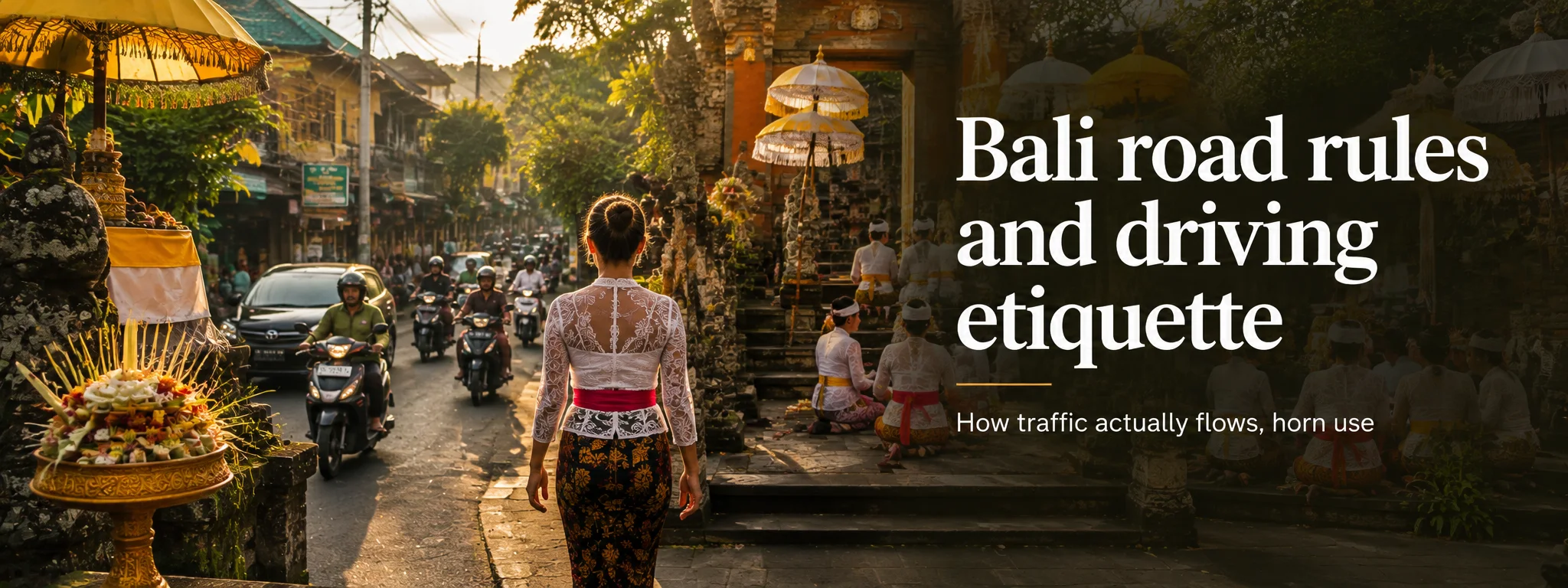
01Licence, vehicle class and insurance come first
Every driver needs a valid licence for the vehicle being driven. Foreign visitors should organise the appropriate international driving documentation before travelling and carry their home licence as well. A rental shop handing over a scooter is not proof that you are legally licensed or insured to ride it.
Read your travel-insurance wording carefully. Motorcycle cover often depends on licence class, helmet use, engine size and compliance with local law. If you cannot legally ride a motorcycle at home, Bali is a poor place to start.
02Bali drives on the left
Indonesia drives on the left. Cars are right-hand drive and overtaking is generally on the right, but Bali’s dense scooter traffic means vehicles can appear on either side at low speed. Mirror checks and slow, predictable movements matter more than aggressive lane positioning.
03How the traffic actually flows
Formal rules exist, but day-to-day movement relies heavily on negotiation. Scooters filter through gaps, vehicles nose slowly into traffic, and junctions can look chaotic to visitors even when locals understand the pattern. Do not copy the most aggressive rider you see.
Leave room, expect someone to emerge from a side lane, and slow before blind corners, village entrances and roadside activity. A calm driver who arrives ten minutes later is preferable to a confident tourist who misreads the road.
04What the horn means
A short horn tap often means “I’m here” rather than anger. Drivers use it before overtaking, on blind bends or when passing someone who may not have seen them. Long, sustained horn use is different and usually signals frustration or danger.
05Scooter-specific risks
Wear a properly fastened helmet, covered footwear and clothing that offers at least some protection. Rain changes traction quickly, painted lines and metal covers become slippery, and potholes can hide under standing water.
Bali Police have publicly urged inexperienced foreign visitors not to ride independently. That advice is sensible: traffic crashes are a far more serious visitor risk than most scams people worry about before arriving.
06Police checks and roadside stops
Carry your licence documents and rental papers, wear the helmet, obey traffic lights and do not ride after drinking. If stopped, remain polite and deal with any official process calmly. Do not build your travel plan around internet stories about “what to pay” at checkpoints.
07Parking and local access
Small parking fees are common at beaches, temples and attractions. Do not block shopfronts, temple entrances or narrow lanes simply because other scooters are squeezed nearby. In village areas, ceremonies can temporarily close or redirect roads; follow local instructions rather than trying to force a route through.
08When a private driver is the better choice
For temple circuits, family days, mountain routes, rainy weather, luggage transfers and evenings involving alcohol, a private driver is usually easier and often good value. Ride-hailing works well for simpler point-to-point trips in many tourist areas. Self-driving is optional in Bali, not a requirement for independence.
09Junctions, overtaking and lane discipline
At uncontrolled junctions, expect vehicles to edge forward until someone yields. Keep speed low enough to stop and avoid assuming that a wider road automatically gives you priority in the way it might at home. When overtaking, make the move obvious and brief; do not sit beside another vehicle where a scooter can suddenly appear between you.
Large vehicles need more space than the road sometimes seems to provide. If a bus or truck is turning through a village junction, patience is faster than trying to squeeze past it.
10Rain and night riding
Tropical rain can go from dry road to standing water in minutes. Visibility drops, painted surfaces become slick and other riders may stop suddenly under whatever shelter they can find. If the rain is heavy, stopping somewhere safe is often the correct decision.
Night riding adds poorly lit pedestrians, dogs, potholes and glare from oncoming vehicles. Visitors who are only marginally comfortable in daylight should use a driver or ride-hailing after dark.
How Bali traffic communicates
Bali’s roads can look chaotic, but much of the movement relies on continual low-speed negotiation. Drivers expect scooters to filter, vehicles to emerge gradually from side roads and usable space to change constantly. A short horn tap normally means “I am here” or “I am passing”, not anger. Indicators help but are not guarantees; watch a vehicle’s position, speed and line as well.
Traffic keeps left. At an uncontrolled junction, do not assume the largest road automatically gives priority. Slow down, make intentions clear and prepare to yield. Vehicles may edge forward until another road user lets them merge. Sudden acceleration creates more danger than a patient pause. Leave room around scooters carrying children or goods, and expect dogs, ceremonies, delivery vehicles and pedestrians to change the road.
Good habits behind the wheel
- Drive slowly enough for an unseen pothole, animal or scooter.
- Check mirrors and blind spots before every turn or lane movement.
- Use a brief horn before a blind bend or narrow pass when useful.
- Never assume a green light makes the junction completely clear.
- Give processions and ceremonial closures time and respect.
- Do not use a phone, even when traffic appears stationary.
Do not copy risky behaviour because local riders seem comfortable with it. Visitors lack their knowledge of road surfaces, shortcuts and informal patterns. If you miss a turn, continue until there is a safe place to change direction. Stopping abruptly or cutting across scooters is more dangerous than adding ten minutes.
Licensing, helmets and insurance
Confirm that your licence and international driving permit cover the specific vehicle under Indonesian requirements. A car licence does not automatically authorise a motorcycle. Read the rental agreement and travel-insurance wording. A claim may be refused if the rider lacks the correct licence, is not wearing a helmet, is intoxicated or breaches policy conditions.
Wear a properly fastened quality helmet for every scooter trip. Closed shoes, eye protection and covered skin reduce injury. Check brakes, tyres, lights, indicators, mirrors and horn before accepting a rental, and photograph existing damage. Ask where the registration papers are kept and obtain a breakdown contact. Avoid handing over a passport as routine security when another arrangement is available.
Alcohol and riding do not mix. Arrange a driver or authorised ride service before drinking. Rain changes conditions quickly: painted lines, metal covers and dusty corners become slippery, visibility drops and potholes fill. Pull over somewhere genuinely safe if a downpour overwhelms visibility.
Parking, fuel and road incidents
Park where the vehicle will not block a gate, temple access, footpath or narrow traffic line. Small official parking fees are common; keep change and accept a ticket when provided. Lock away valuables. Use established fuel stations where possible and confirm the pump is reset before filling. Do not wait until the tank is almost empty in quieter regions.
If stopped by police or involved in a collision, remain calm, move out of immediate danger where possible and contact the rental company or insurer. Record names, location, number plates and photographs without escalating an argument. Seek professional help promptly for injury or serious damage, and do not sign a document you cannot understand.
When not to drive yourself
A driver is often wiser for first arrivals, long cross-island days, unfamiliar night roads or steep mountain routes. A scooter can suit an experienced, correctly licensed rider making simple local trips, but it is not an essential Bali experience. Good road etiquette starts with honestly matching transport to your skill, energy and the conditions that day.
15 Junctions and overtaking require patience
Road position in Bali is negotiated more continuously than many visitors expect. A horn often means “I am here” rather than anger, and vehicles may edge forward to create a gap. That does not remove your duty to stop, look and yield safely. Never copy a local rider through a blind junction simply because they moved first; they may have knowledge, visibility or skill you do not.
Overtake only when you can see a clear exit and return to your lane without forcing another road user to brake. Avoid passing near bends, bridge approaches, village entrances, ceremonies or lines of stopped traffic. A gap between cars may contain a scooter, dog, pedestrian or offering that is invisible from behind.
16 Rain and darkness change the road completely
Tropical rain can hide potholes, erase lane markings and make polished surfaces slippery within minutes. Pull over somewhere genuinely clear of traffic if visibility collapses; sheltering beneath a tree or blocking a shop entrance creates another hazard. At night, dark clothing, animals and unlit vehicles can appear late, while glare makes judging road edges harder.
Build a weather buffer into day trips and do not let a prepaid booking push you into unsafe riding. If the return journey will be after dark, or if heavy rain is forecast, a car with a professional driver is often the sensible choice.
17 If there is a crash or breakdown
Move out of traffic only when it is safe, check for injuries and call for medical help before arguing about damage. Photograph the scene, vehicles, plates, licences and road conditions, and contact the rental company and insurer promptly. Do not surrender your passport as an informal guarantee. For a hired vehicle, use the provider's documented process rather than accepting an unknown roadside “fixer”.